
London Reupholstery for Sofas, Chairs & Furniture
Sofas from £1,348 and dining chairs from £481, including standard-collection fabric.
Free, no-obligation quote. We review enquiries within 24–48 hours.
By Muthana, Master Upholsterer
Kennington Upholstery provides London reupholstery from our Central London workshop, covering sofas, armchairs, dining chairs, headboards, ottomans, banquettes, and commercial seating. We strip pieces back to bare frames, rebuild them properly, and cover them in the fabric or leather of your choice.
Prices start from £481 for a dining chair and £1,348 for a two to three seater sofa, including fabric from the standard collection. Typical lead time is three to five weeks. The workshop holds over 8,000 fabric swatches and 200 leathers from suppliers including Warwick, with collection and delivery across Central, North, South, East, and West London.
Compare the broader services hub if you are choosing between reupholstery, restoration, and repair.
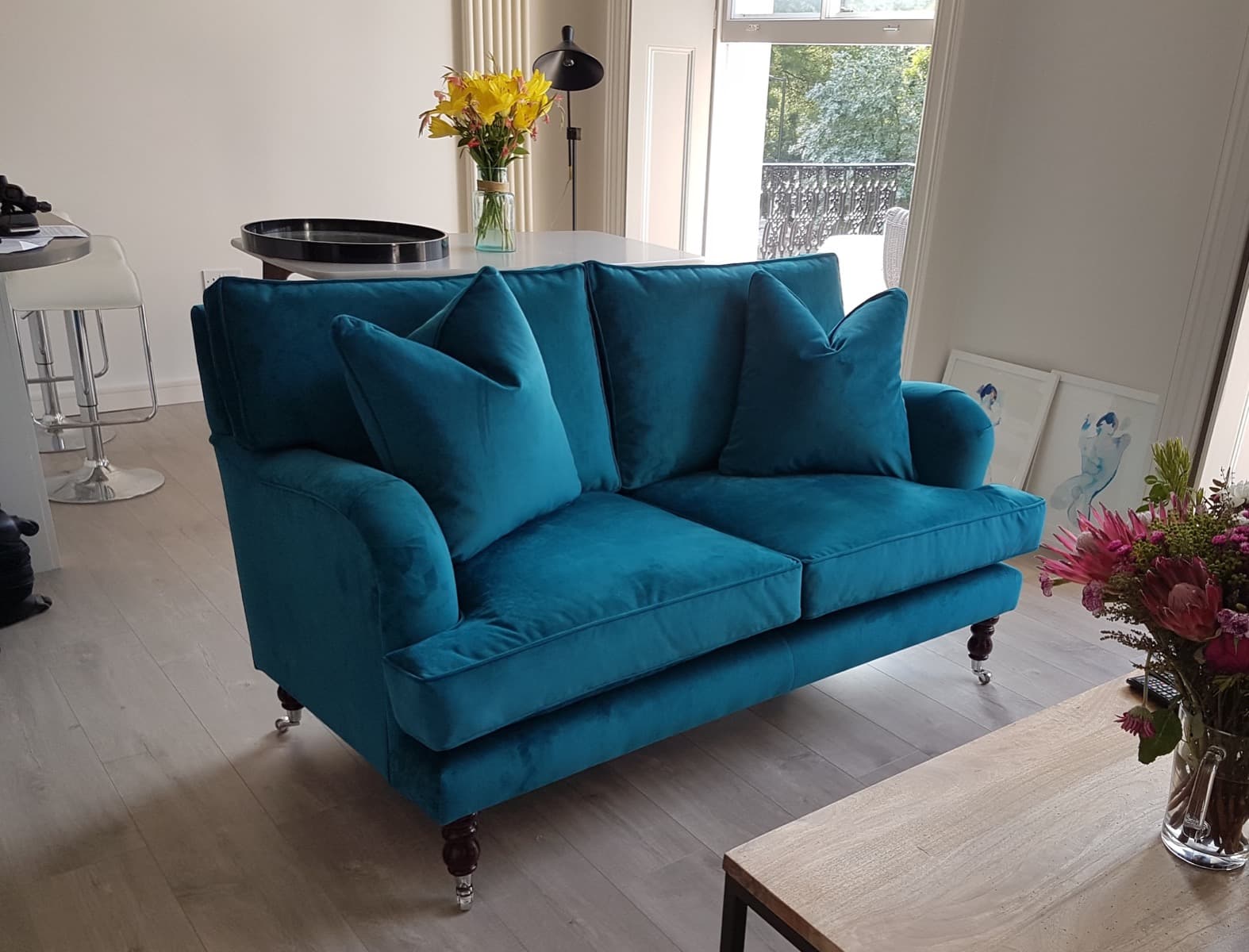
Most furniture made before the 1990s was built to last generations. Solid hardwood frames, proper joinery, and materials that simply are not used in mass production anymore. When a sofa or armchair starts to look tired, the frame underneath is usually still perfectly sound. Reupholstery lets you keep what is good and replace what is worn.
We handle everything from single dining chairs to large corner sofas. Armchairs, club chairs, chaise longues, ottomans, footstools, window seats, headboards, nursing chairs, rocking chairs, and carver chairs all come through our workshop regularly. If it has a frame and padding, we can reupholster it.
Every piece is different. A Victorian button-back armchair needs a completely different approach to a 1960s Danish lounge chair or a modern sofa with loose cushions. We work with both traditional and contemporary construction methods, matching the technique to the piece.
London Reupholstery Areas We Cover
Our workshop is in Central London, so collection and delivery is practical across the whole city. We regularly handle domestic and commercial reupholstery from Fitzrovia, Bloomsbury, Soho, Covent Garden, Islington, Chelsea, Kensington, Clapham, Shoreditch, Hampstead, Notting Hill, and surrounding London areas.
The Reupholstery Process, Step by Step
A full reupholstery follows the same sequence every time, though the details change with each piece. Here is what happens once your furniture arrives at our workshop.
Strip down. We remove all existing fabric, padding, and old tacks. Everything comes off down to the bare frame. This is the only way to properly assess the condition underneath. We often find previous repairs, bodged fixings, or damage that was hidden by the old covering.
Frame inspection and repair. With the frame exposed, we check every joint, rail, and corner block. Loose joints are re-glued and clamped. Cracked rails are spliced or replaced. Any woodworm damage is treated. The frame has to be solid before we build on top of it.
Webbing. New jute or elasticated webbing is stretched and tacked across the seat base and back. This is the foundation that carries all the weight. We use English webbing for traditional pieces and elasticated webbing where the original design calls for it.
Springs. If the piece has sprung seating, we fit new double-cone springs or serpentine springs depending on the construction type. Each spring is hand-tied with laid cord to keep it in position and give the seat its shape. A properly sprung seat should feel firm but giving, with no hard spots or sag.
Stuffing. Traditional pieces are stuffed with horsehair or coir fibre, built up in layers and stitched into place to form the seat and back profiles. Modern pieces typically use foam of the correct density and firmness. We can discuss which approach suits your piece and your preference for comfort.
Calico. A layer of unbleached calico is fitted tightly over the stuffing. This gives the piece its final shape before the top cover goes on. We check the profile, symmetry, and firmness at this stage. Any adjustments are much easier to make now than after the fabric is on.
Top cover. Your chosen fabric or leather is carefully cut, matched for pattern where needed, and fitted to the piece. Piping, studding, deep buttoning, and other details are added at this stage. We take particular care with pattern matching on stripes and large prints, because misaligned patterns are immediately noticeable.
Finishing. The underside is covered with fresh bottom cloth. New castors or glides are fitted if required. The piece gets a final inspection before we contact you to arrange delivery.
Recent London Reupholstery Work
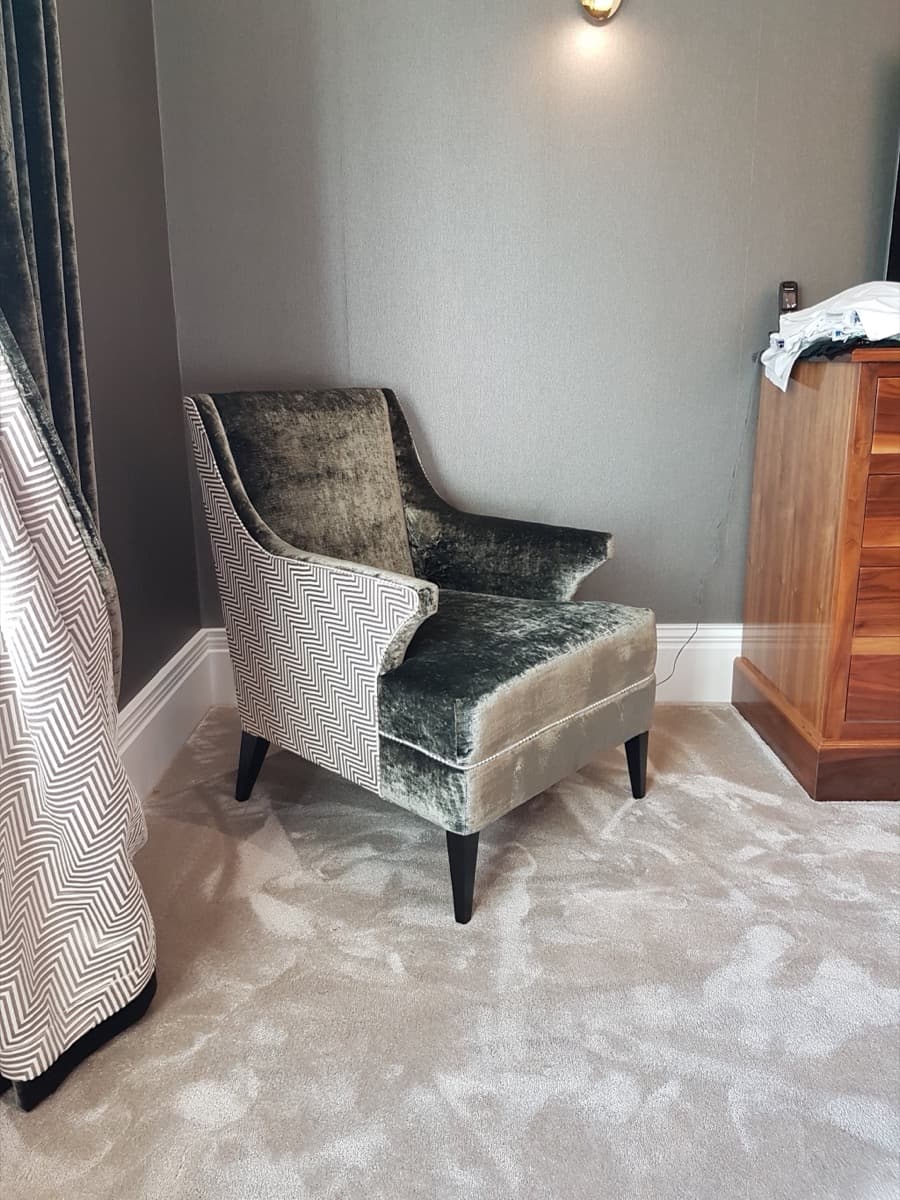
Search results for reupholstery are trust-heavy because people want to see real furniture before they send photos or book collection. Our galleries show completed domestic and commercial work from London homes, restaurants, offices, and venues.
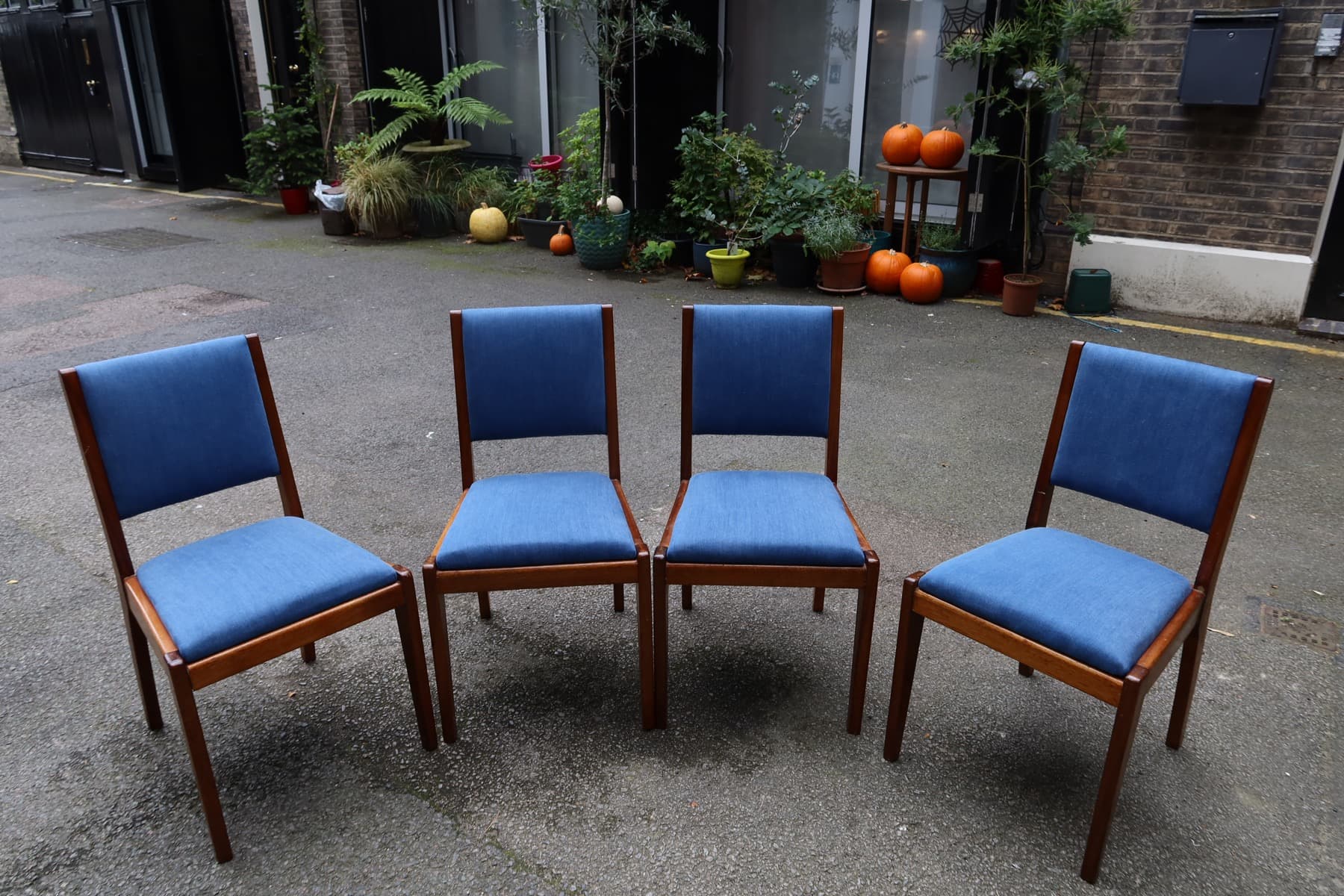
Dining chairs reupholstered in London
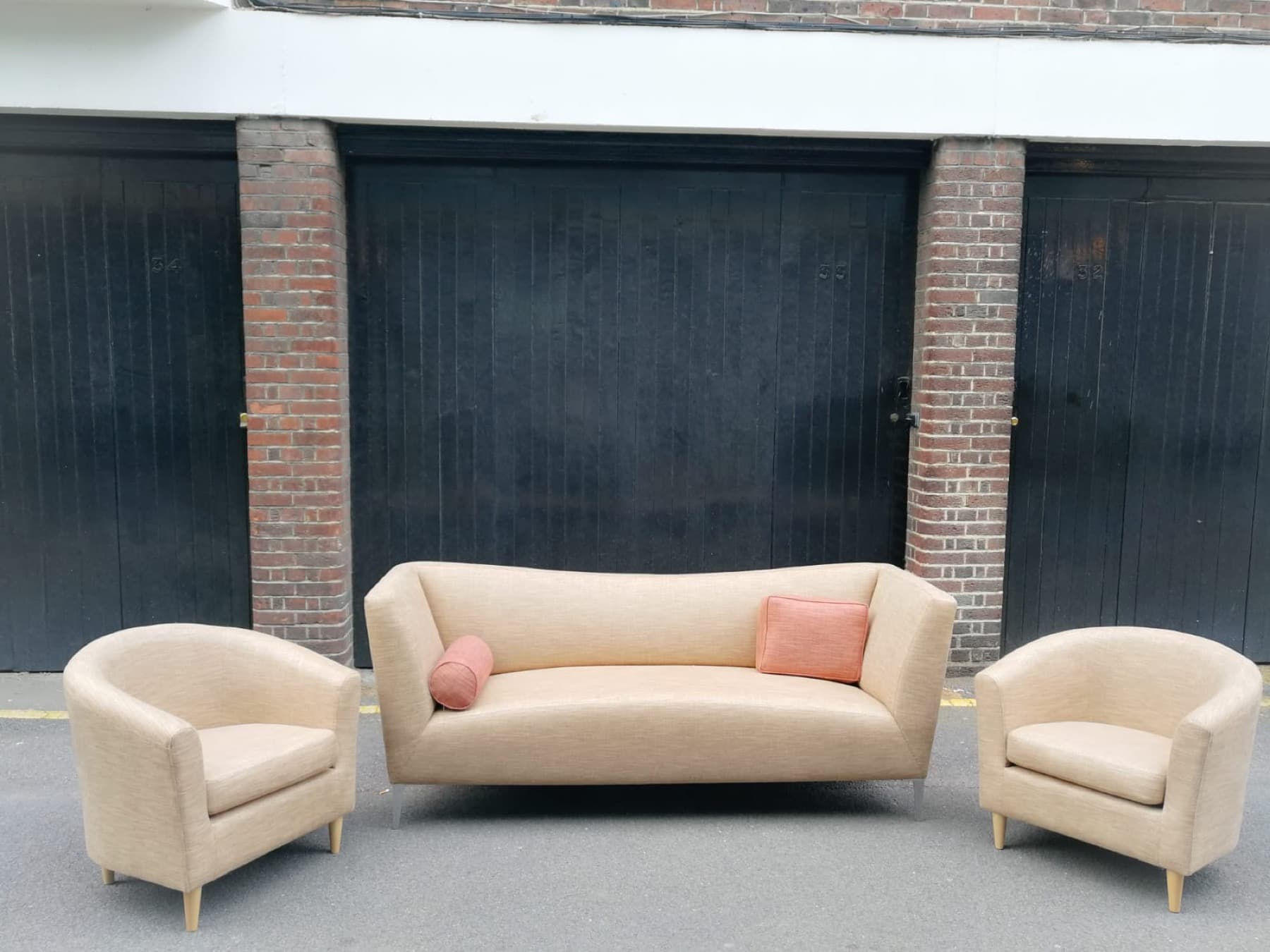
Sofa and chairs rebuilt and recovered
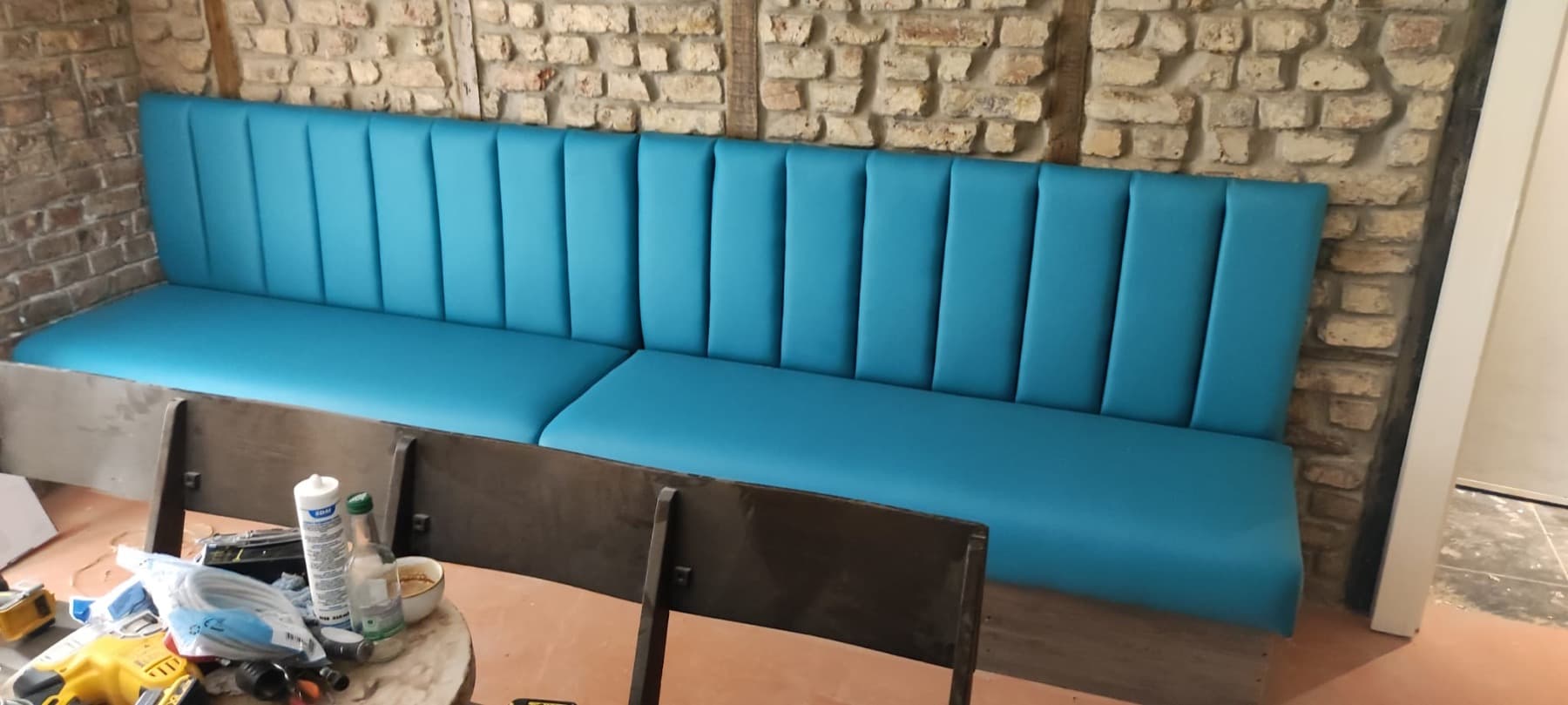
Commercial Upholstery Project Gallery
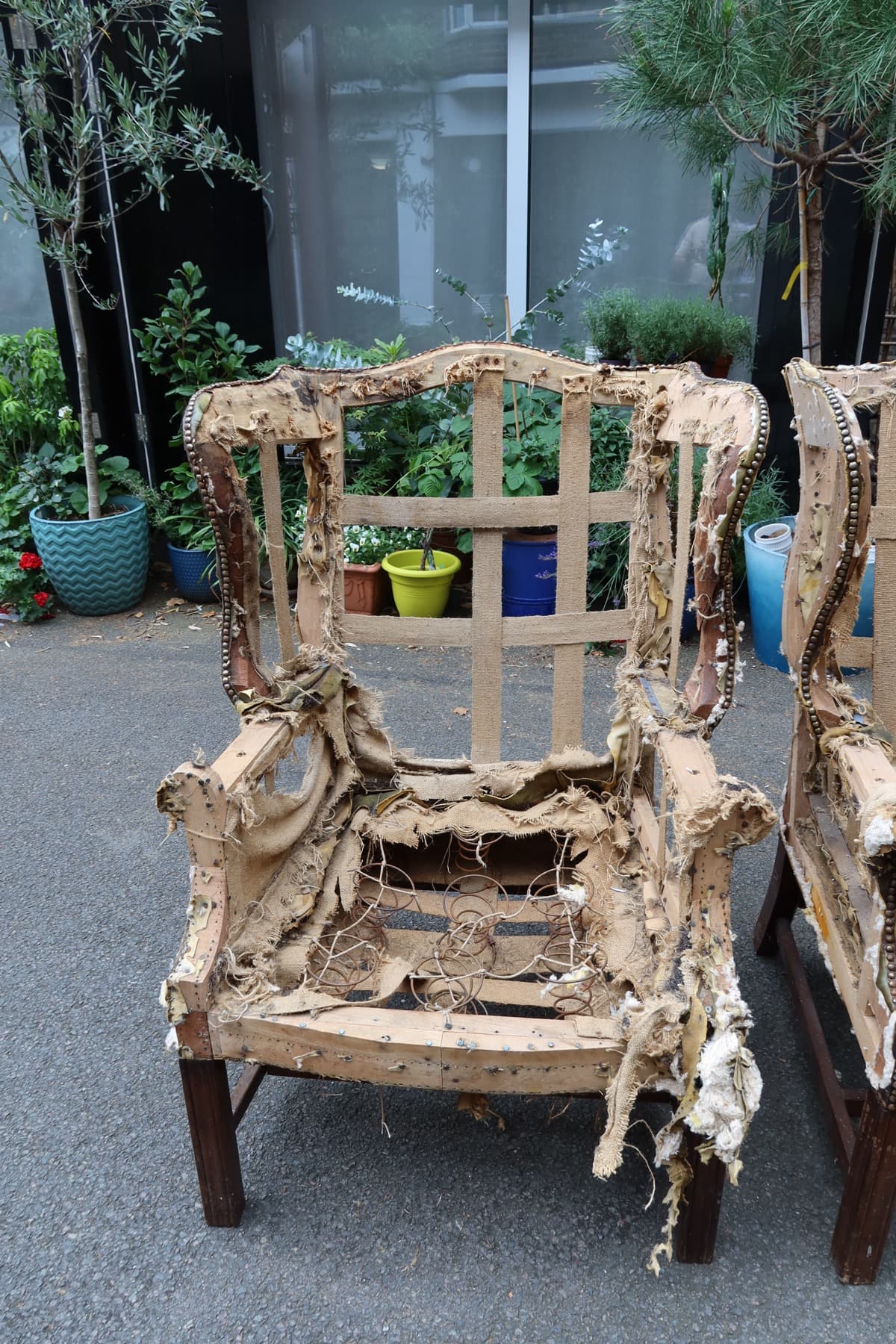
Traditional frame and spring work
Domestic Sofa & Chair Reupholstery
Browse completed armchairs, sofas, dining chairs, footstools, and family pieces from London homes.
Commercial Upholstery Project Gallery
See restaurant seating, banquettes, venue chairs, and contract upholstery projects handled by the workshop.
Full Upholstery Gallery
Review broader examples of our craftsmanship, fabric choices, detailing, and finished upholstery work.
London Reupholstery Reviews on Google
5.0 out of 5 on Google when last checked
Snapshot last checked 24 July 2026. Open Google Maps for the current total and latest reviews.
Loading live reviews connects to Google Maps. You can also allow them automatically through Cookie Preferences.
Choosing Your Fabric
We have access to over 8,000 fabrics and 200+ leathers from suppliers including Warwick, and we are happy to source from other houses if you have something specific in mind. Choosing fabric can feel overwhelming, so here is some practical advice.
Think about how the piece will be used. A family sofa with young children needs a durable, cleanable fabric. Look for high rub counts (30,000+ Martindale for heavy use) and consider performance fabrics that resist staining. A bedroom chair that rarely gets sat on can wear something more delicate.
Colour is personal, but consider the light in your room. A fabric that looks perfect under showroom lighting can look quite different in a north-facing living room. If you are deciding between a few options, we can help you compare them before you commit.
Leather is hardwearing and ages well, but it does need occasional care. We can talk you through the differences between aniline, semi-aniline, and pigmented leathers and which suits your situation. If you are unsure, ask. We would rather spend ten minutes on the phone helping you choose than have you disappointed with the result.
Lead Times and What to Expect
A typical reupholstery project takes three to five weeks from collection to delivery. Simpler jobs like dining chair seat pads can be quicker. Larger or more complex pieces, especially those needing frame repair or traditional hand-stuffing, may take longer.
Once you accept a quote, we arrange collection at a time that suits you. Our team will wrap and protect the piece for transport. Before collection day, remove any loose cushions, clear a path to the front door, and take anything off or out of the furniture (coins in the seat crevice, TV remotes, the lot).
We will contact you if we find anything unexpected during the strip-down, for example hidden frame damage that was not visible during the initial assessment. We never carry out additional work without discussing it with you first.
When to Reupholster vs Buy New
Reupholstery makes strong sense when the frame is solid and well made. Hardwood frames with dowelled or mortise-and-tenon joints are built to last and are worth investing in. If you press on the arm of your sofa and the frame feels rigid and sturdy, the bones are almost certainly good.
It makes less sense on cheap flat-pack furniture with stapled softwood frames or particle board construction. These pieces were not designed to be reupholstered and the frame often will not withstand the process. We are honest about this. If your piece is not worth the investment, we will tell you.
Sentimental value matters too. A chair inherited from a grandparent, a sofa you bought for your first home together, a piece with a story behind it. These are worth keeping regardless of what a replacement would cost. Reupholstery lets you keep the piece and make it work in your home for another few decades.
Indicative Pricing
Every reupholstery project is unique. Pricing depends on the piece, its condition, chosen fabric, and complexity of work. These guide prices include labour and fabric from our standard collection.
Dining Chair
From £481
Footstool / Ottoman
From £374
Armchair
From £804
Sofa (2–3 seater)
From £1,348
Antique or heavily damaged frames may require additional restoration work. Get a free quote for an accurate price based on your piece.
Frequently Asked Questions
How much does reupholstery cost?▼
Every project is quoted from photos and the condition of the piece. As a guide, fully upholstered dining chairs start from £481, footstools and ottomans from £374, armchairs from £804, and two to three seater sofas from £1,348 including fabric from our standard collection. We provide a free, no-obligation quote for every project.
How long does reupholstery take?▼
A typical reupholstery project takes three to five weeks from collection to delivery. Simpler jobs like dining chair seat pads can be quicker. Larger or more complex pieces, especially those needing frame repair or traditional hand-stuffing, may take longer. We give you a clear timeframe before starting.
What types of furniture can be reupholstered?▼
We reupholster sofas, armchairs, dining chairs, club chairs, chaise longues, ottomans, footstools, window seats, headboards, nursing chairs, rocking chairs, and carver chairs. If it has a frame and padding, we can usually reupholster it. We handle both traditional and contemporary construction methods.
How many fabric options do you offer?▼
We have access to over 8,000 fabrics and 200+ leathers from suppliers including Warwick, and we can source from other houses if you have something specific in mind. You can review options with us in the workshop or send us your shortlist for guidance before committing.
Do you offer collection and delivery?▼
Yes, we arrange collection and delivery across London. Our team wraps and protects your piece for transport, then contacts you when the piece is ready for return delivery. Once you accept a quote, we arrange collection at a time that suits you.
When should I reupholster rather than buy new furniture?▼
Reupholstery makes strong sense when the frame is solid and well made, particularly hardwood frames with dowelled or mortise-and-tenon joints. It is less worthwhile on cheap flat-pack furniture with stapled softwood or particle board construction. Sentimental value matters too. Inherited pieces and furniture with personal meaning are often worth keeping.
What happens during a full reupholstery?▼
We strip the piece down to the bare frame, inspect and repair any frame damage, fit new webbing and springs, rebuild the stuffing, fit a calico layer to check the shape, then carefully cut and fit your chosen fabric or leather. The underside is finished with fresh bottom cloth and new castors if required.