
Commercial Upholstery Services in London
By Muthana, Master Upholsterer
Contract upholstery for restaurants, hotels, offices, and public spaces. Fire-rated materials, bulk pricing, and dedicated project management.
Kennington Upholstery provides BS 7176 and Crib 5 compliant commercial upholstery for restaurants, hotels, pubs, offices, care homes, and churches in London. All commercial work uses fire-retardant materials meeting UK safety regulations. The workshop carries public liability and professional indemnity insurance and can provide risk assessments and method statements for larger organisations.
See examples in our commercial upholstery project gallery.
Need the wider overview first? Browse the services hub for the full commercial and domestic range.
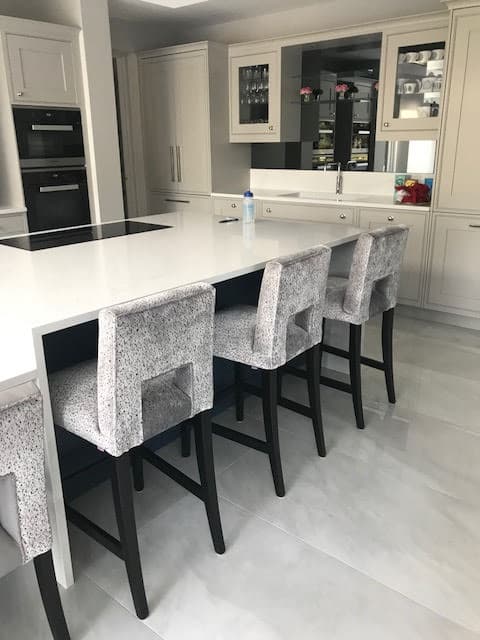
Commercial upholstery is a different discipline from domestic work. The materials are different, the regulations are stricter, and the timelines are tighter. We have been doing contract work for businesses across London for years, and we understand what is required to get the job done properly and on schedule.
We work with restaurants, hotels, pubs, offices, co-working spaces, care homes, churches, schools, and public venues. The common thread is that every one of these environments puts furniture through heavy, daily use. The upholstery has to hold up, look presentable, and meet fire safety regulations. That is what we deliver.
Fire Safety, BS 7176 and Crib 5 Specifications
Commercial upholstery fire requirements depend on where and how the seating will be used. The Furniture and Furnishings (Fire) (Safety) Regulations chiefly cover domestic upholstered furniture; non-domestic premises are also subject to workplace fire-safety duties and the responsible person's fire risk assessment.
BS 7176 is commonly used to specify the ignition resistance of non-domestic seating, and a Crib 5 specification is often requested for contract projects. It is not a universal rule for every office, restaurant, hotel, or public building. The venue, designer, responsible person, insurer, or fire consultant should confirm the required hazard category before fabric is ordered.
A fabric certificate alone does not prove that a finished seat meets a project specification. Cover fabric, foam, fillings, interliners, and the tested upholstery build-up all matter. Where a project calls for Crib 5 or another performance level, we work from the written specification and request the relevant supplier documentation for the proposed materials.
For authoritative background, see the UK Government furniture fire-safety guidance and its guidance for non-domestic premises.
Who We Work With
Restaurants, Pubs, and Hospitality
Booth seating, banquettes, bar stools, and dining chairs take a beating in hospitality. Food and drink spills are constant, so fabric choice matters enormously. We use wipeable faux leathers, vinyl, and high-performance woven fabrics that can be cleaned quickly between sittings. For pubs and bars, we often work with heavier-weight vinyls that resist scuffing and puncture damage from belt buckles and keys.
Hotels and Serviced Apartments
Hotels need upholstery that looks smart after thousands of guest stays. We regularly recover headboards, bedroom chairs, lobby seating, and restaurant furniture for independent hotels and boutique chains. For headboards, we often recommend a crypton-type fabric or a stain-resistant treatment, because housekeeping staff need to wipe them down easily.
Offices and Co-working Spaces
Office chair reupholstery is one of our most requested commercial services. A good task chair costs several hundred pounds to replace, but recovering the seat and back panels in fresh fabric costs a fraction of that. We collect in bulk, turn them around, and return them ready for use. For breakout areas, reception seating, and meeting room chairs, we can match your brand colours and suggest fabrics that suit the wear pattern.
Care Homes, Churches, and Public Buildings
Care homes have specific requirements beyond fire safety. Fabrics often need to be waterproof or at least water-resistant, easy to clean with antibacterial solutions, and resistant to staining. Vinyl and specialist healthcare fabrics from suppliers like Panaz and Camira are designed for exactly this purpose. For churches and community halls, we recover pew cushions, kneelers, and stacking chairs. These jobs often involve large quantities, and we offer volume discounts accordingly.
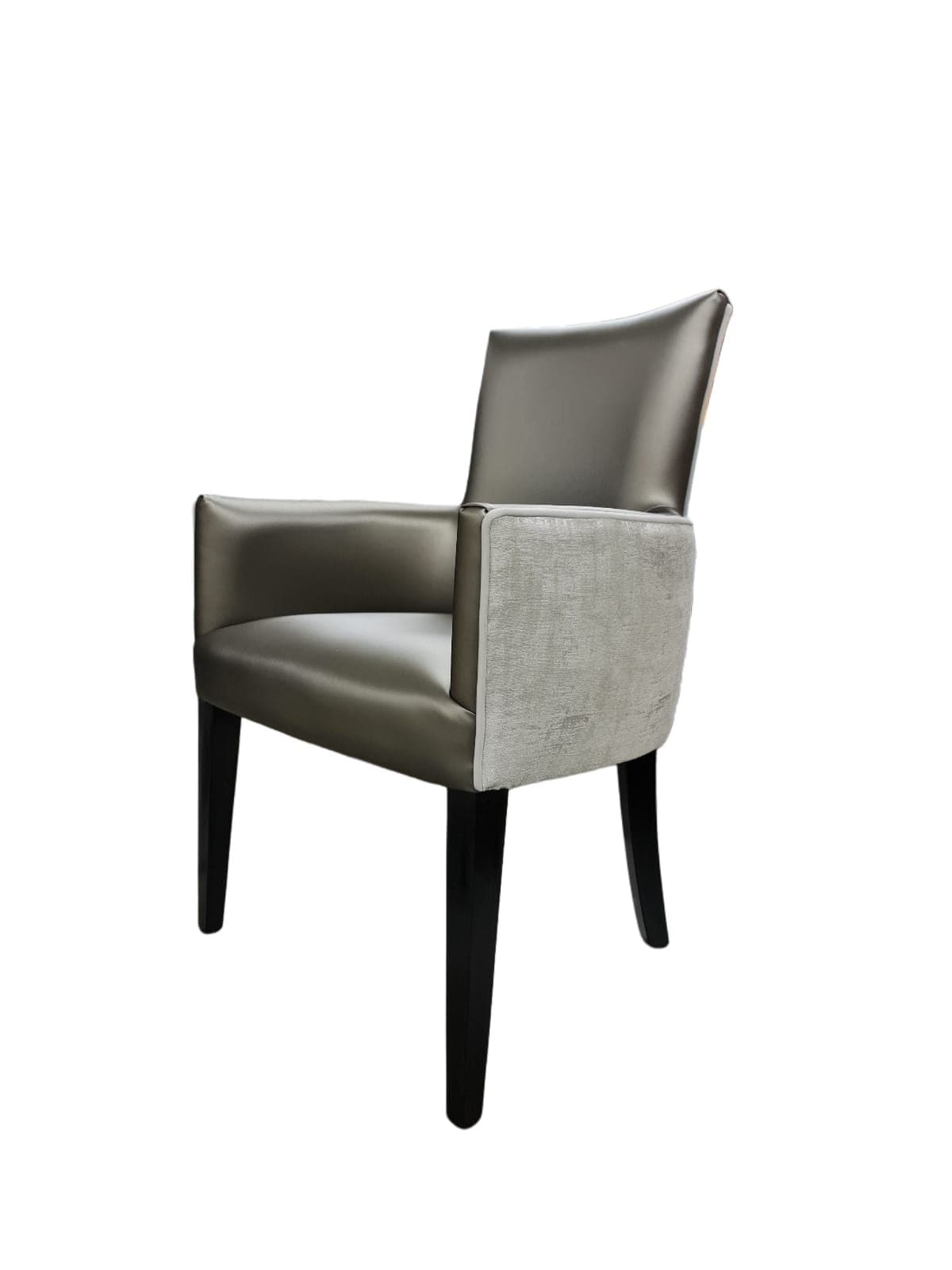
The Contract Upholstery Process
Site Survey
For any commercial project, we start with a site visit. We need to see the furniture in context: how it is used, what condition it is in, what access is like for collection, and whether there are any practical constraints (narrow staircases, listed building restrictions, and so on). For restaurants and hotels, we typically visit outside of service hours so we can assess the seating without disrupting your business.
Sampling and Approval
Before we start production, we supply fabric samples for your approval. On larger jobs, we produce a sample piece first, one chair or one section of banquette done to the agreed specification. You sign it off, we photograph it as the quality benchmark, and the rest of the order follows that standard. This avoids any surprises at delivery.
Scheduling Around Your Business
We know you cannot shut down a restaurant for a week while we recover your seating. Most commercial work is done in phases. We collect a batch, return them finished, and collect the next batch. For restaurants, we often work around Monday and Tuesday closures. For hotels, we coordinate with your maintenance schedule. For offices, we can work over weekends or during quiet periods. The point is that we fit around your operations, not the other way round.
Fabric Selection for High-Traffic Environments
The durability of upholstery fabric is measured by the Martindale rub test, which simulates wear by rubbing the fabric in a figure- of-eight motion under controlled pressure. The result is expressed as a number of rubs (sometimes called cycles). The higher the number, the more durable the fabric.
For domestic use, 15,000 to 25,000 Martindale rubs is usually adequate. For commercial use, we recommend a minimum of 40,000 rubs, and for heavy-use environments like pub seating and restaurant booths, we go for 50,000 to 100,000 rubs or higher. Many contract-grade faux leathers exceed 100,000 rubs and are effectively indestructible under normal conditions.
Beyond rub count, we consider stain resistance, UV fastness (important for seating near windows), and ease of cleaning. Some fabrics have built-in stain protection like Aquaclean technology, which allows stains to be removed with water alone. Others benefit from a factory-applied Teflon or Scotchgard treatment. We will recommend the right fabric based on your specific setting, traffic level, and maintenance routine.
Bulk Pricing and Project Management
Commercial work is priced per piece, and unit costs drop as quantities increase. A single dining chair might cost one amount, but if you need forty done, the per-chair cost comes down significantly because we can batch the cutting, sewing, and upholstery stages efficiently. We will give you a clear, itemised quote before any work starts.
For larger projects, we assign a dedicated point of contact who manages the schedule, liaises with your team, and keeps you updated on progress. We coordinate with interior designers, fit-out contractors, and facilities managers as needed. If you need delivery and installation on site, we handle that too.
We carry professional indemnity and public liability insurance, and we can provide risk assessments and method statements if your premises require them. We are used to working within the procurement processes of larger organisations, and we are happy to provide references from previous commercial clients.
Frequently Asked Questions
What fire safety regulations apply to commercial upholstery?▼
All upholstered seating in UK commercial spaces must comply with BS 7176. Most commercial environments require Crib 5 rated materials as a minimum. This means every component (fabric, foam, interliner, and fibre filling) must be fire rated. We use Crib 5 rated foams and interliners as standard on all commercial work and provide written fire compliance documentation.
Is there a minimum order for commercial upholstery?▼
There is no minimum order. We handle everything from a single office chair reupholstery to large-scale restaurant and hotel refurbishments involving hundreds of pieces. Unit costs come down as quantities increase because we can batch the cutting, sewing, and upholstery stages efficiently.
What commercial sectors do you work with?▼
We work with restaurants, hotels, pubs, offices, co-working spaces, care homes, churches, schools, and public venues across London. Each environment has different requirements for durability, fire safety, and cleaning, and we select materials accordingly.
How long do commercial upholstery projects take?▼
Timelines depend on the scope of work and number of pieces. We schedule commercial work in phases to minimise disruption to your business. For restaurants, we often work around Monday and Tuesday closures. For hotels, we coordinate with maintenance schedules. For offices, we can work over weekends. We provide a clear schedule before starting.
Do you offer bulk pricing for commercial orders?▼
Yes, commercial work is priced per piece and unit costs drop as quantities increase. We provide clear, itemised quotes before any work starts. For larger projects, we assign a dedicated point of contact who manages the schedule and keeps you updated on progress.
What fabrics are suitable for high-traffic commercial environments?▼
We recommend fabrics with a minimum of 40,000 Martindale rubs for commercial use, and 50,000 to 100,000+ rubs for heavy-use environments like pubs and restaurant booths. We use wipeable faux leathers, vinyl, and high-performance woven fabrics. Many contract-grade materials also feature built-in stain protection like Aquaclean technology.
Do you provide fire compliance documentation?▼
Yes, every commercial job leaves our workshop with the appropriate fire compliance label attached. We provide written documentation confirming the materials used and the standard met. This is important for your insurance records, premises licence, and local authority inspections. We also carry public liability and professional indemnity insurance.